

Dwingelderveldroute
2 hours 18 minutes
(46 km)
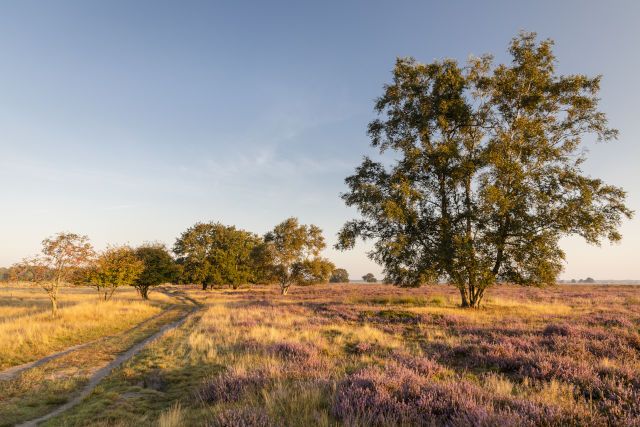
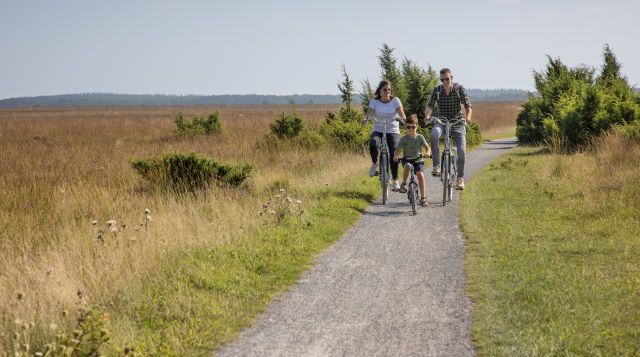
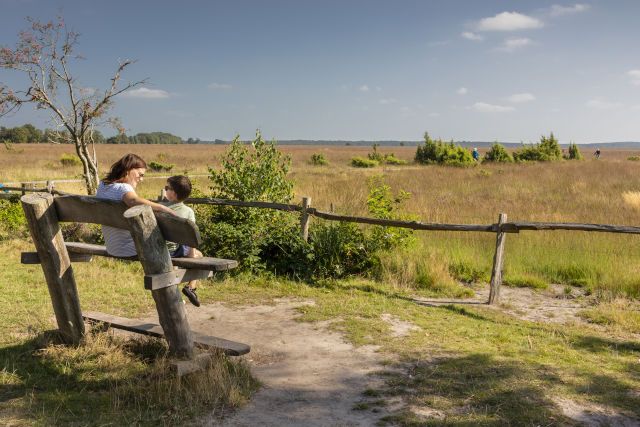
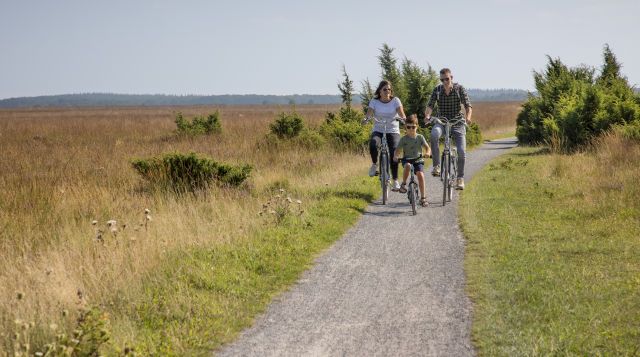
This 46 km route runs from Dwingeloo through one of the most beautiful natural landscapes in the Netherlands. National Park Dwingelderveld is the largest, wet heathland area in Western Europe. The heather blooming in August colours the area beautifully purple. But the cycle tour also leads you through woods and past pools.
Parking
The route starts on the Brink at No 26 (Hotel Wesseling) in Dwingeloo. Behind the Brink on the Weverslaan or on the Bruges, you can park free of charge in spacious car parks (Car park Dwingeloo Beleef de Ruimte and Car park 2 Dwingeloo Beleef de Ruimte).
Signposting
This route is signposted using white hexagonal signs with green printing. It is also possible to pick up the route using the signposts at other locations.
Food & drink
Would you like to have something to eat or drink during this cycle tour? You can do so at various catering establishments in Dwingeloo, Ruinen, Fluitenberg and Pesse.
-
Example route sign

Example route sign

You are going to see this
-
93
Starting point:
Cycling junction 93
Dwingeloo
Navigate to starting point -
Tourist Info Point Dwingeloo
Tourist Info Point Dwingeloo
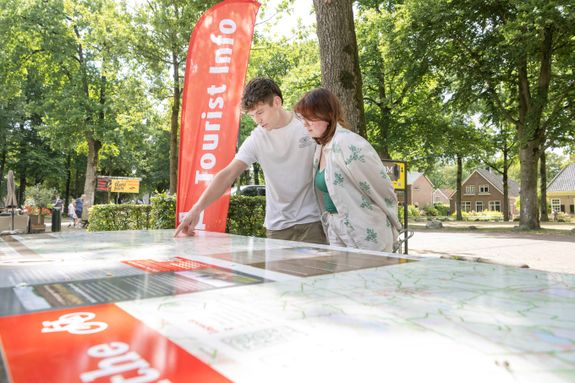
Discover the region at Tourist Info Point Dwingeloo.
-
88
-
Planetron
Planetron
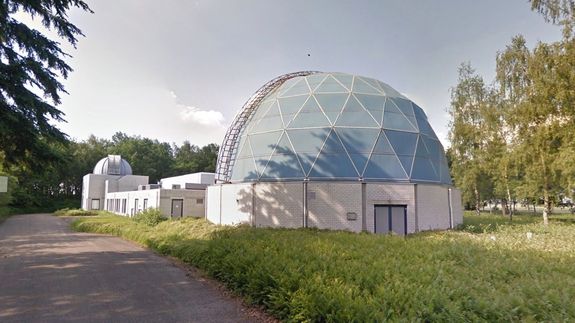
The Planetron Cinedome in Dwingeloo housed one of the two Zeiss planetariums in the Netherlands.
-
82
-
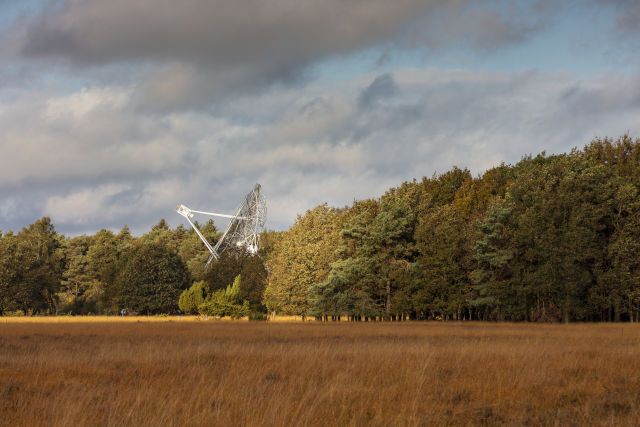
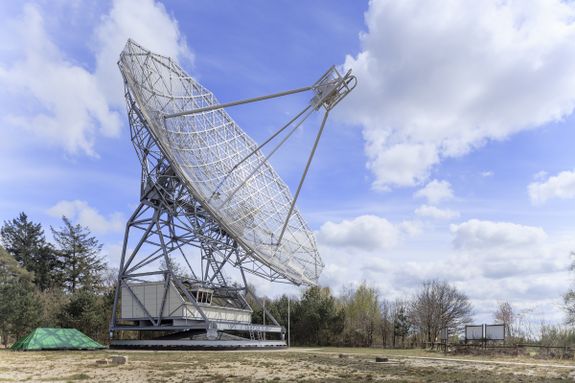
Radio telescope Dwingeloo
Radio telescope Dwingeloo
The Dwingeloo Radio Telescope, opened in 1956, has been a national monument since 2009 and is one of the oldest and internationally most famous radio telescopes in the world. The radio telescope is located in a radio tor...
-
83
-
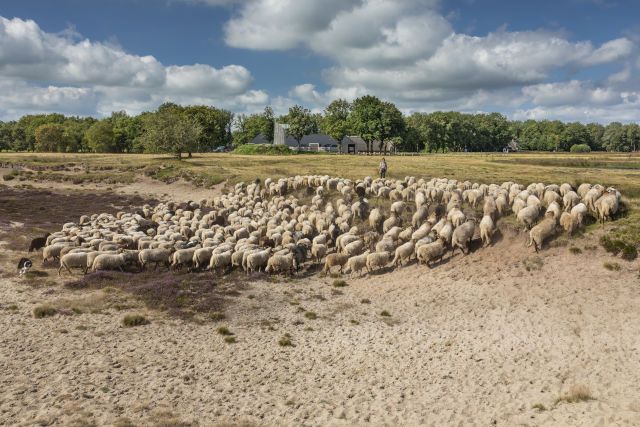
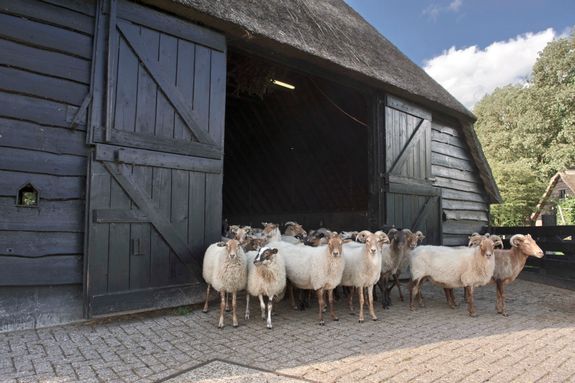
Sheepfold Achter 't Zaand
Sheepfold Achter 't Zaand
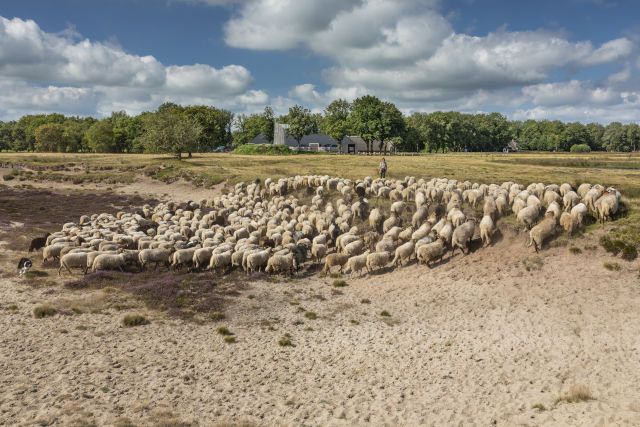
For centuries, sheep have been helping people. In and around the Achter 't Zaand sheepfold in Lhee, on the edge of the Dwingelderveld, this is still visible. There is a happy union between the Drenthe Heath Sheep, the shepherd and his dog.
-
43
-
32
-
58
-
8
-
9
-
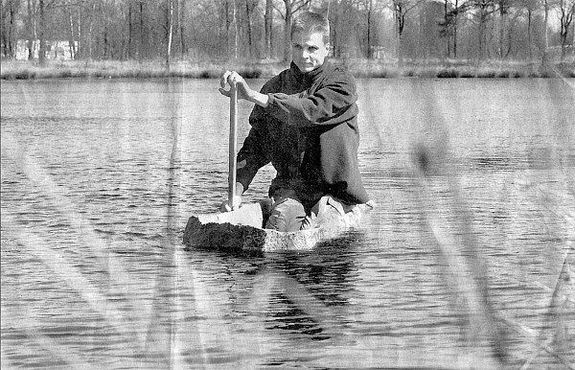
Bronze replica "Boat of Pesse"
Bronze replica "Boat of Pesse"
Oldest vessel in the world, made from a hollowed-out tree trunk The canoe was found south of Pesse in 1955, during the excavation of the Blikkenveen in the route of the A28 motorway. It...
-
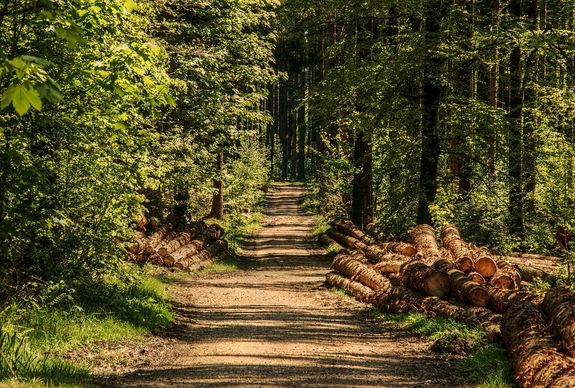
Savings Bank Forest
Savings Bank Forest
The Spaarbank forest was originally a wet heathland that was part of the Boerenveen lakes. In 1890, the Spaarbank from Hoogeveen bought the land as an investment and planted forest for...
-
34
-
61
-
91
-
41
-
76
-
85
-
53
-
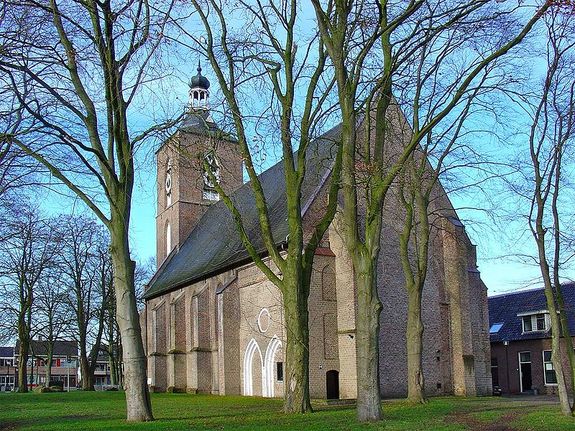
Maria Church Ruinen
Maria Church Ruinen
Maria Church from the 12th century is a Gothic church, the church originally belonged to the Benedictine monastery of Ruinen.
-
54
-
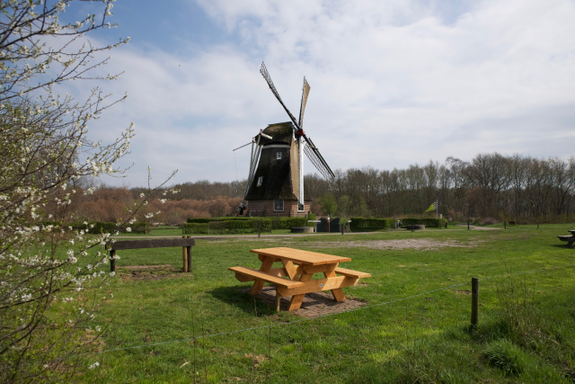
Corn mill De Zaandplatte
Corn mill De Zaandplatte
Several years ago, the Zaandplatte was voted the most beautiful mill in Drenthe after a survey.It is a grinding mill that runs frequently and sells second-hand books and flour...
-
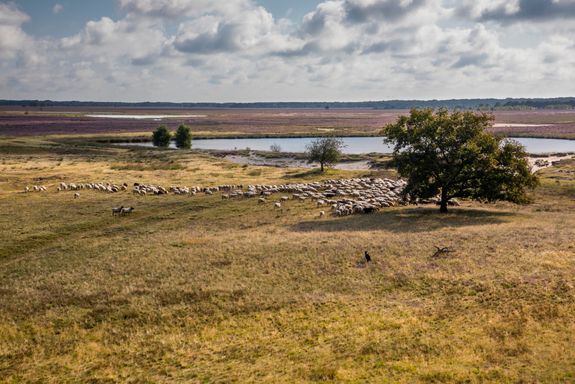
National Park Dwingelderveld
National Park Dwingelderveld
An attraction for everyone who loves nature: National Park Dwingelderveld in south-west Drenthe! The largest quiet wet heathland in Western Europe, the Dwingelderveld wo...
-
57
-
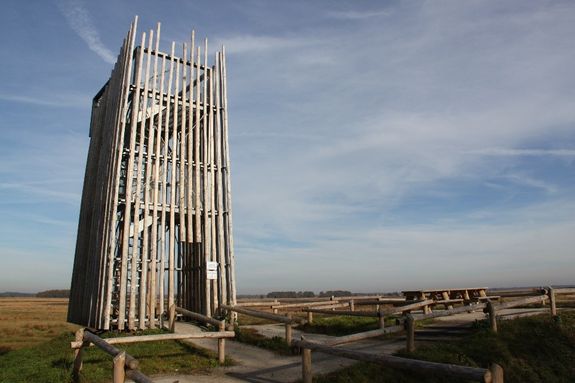
View tower Ruiner sheepfold
View tower Ruiner sheepfold
An embankment allows interested visitors to reach the viewing hill, which is three metres above ground level. The viewing hill is also accessible for wheelchair users, buggies, prams and other ve...
-
Sheepfold Ruinen
Sheepfold Ruinen
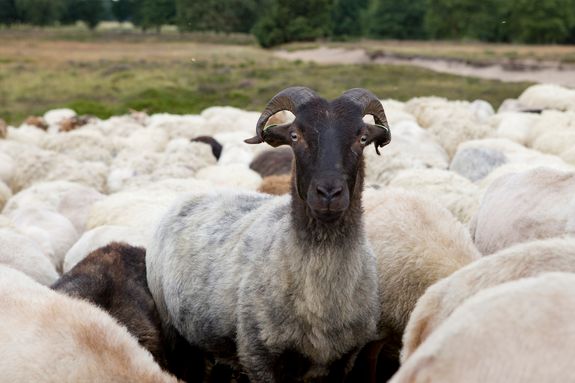
The Schaapskudde Ruinen, is one of two flocks grazing on the Dwingelerveld National Park and consists of about 300 Drentse heath sheep. The site of the flock consists of a sch...
-
56
-
86
-
84
-
Havezate Oldengaerde
Havezate Oldengaerde
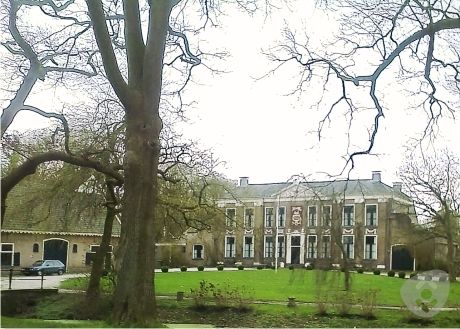
The Oldengaerde estate consists of a house, gardens and even a forest, which are listed buildings. The entire house and gardens were designated a national monument in 2004....
-
78
-
93
End point:
Cycling junction 93
Dwingeloo
Navigate to end point
Description
93
Starting point:
Cycling junction 93
Dwingeloo
Navigate to starting point
Additional Info
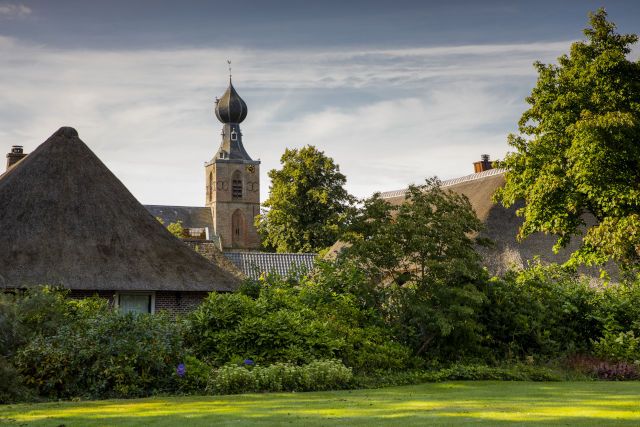
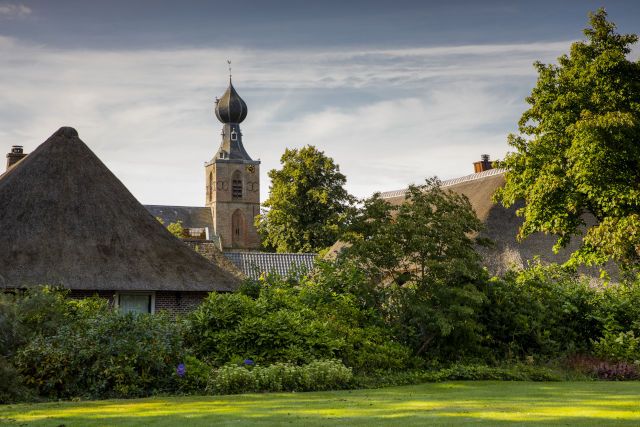
- Ancient writings first mention Dwingeloo in 1180. The esdorp has one of the most beautiful, protected brinks in Drenthe. The reformed Sint Nicolaaskerk is a brick, Gothic hall church from the early 15th century. In 1630, the church partially collapsed. In 1923, a major fire hit the church, only the wall work was spared. The spire, a replica after the original from 1631, has an onion shape. That is why the church is also called the Siepel church. Siepel is Drenthe for onion.
- The statue in front of the church depicts the saga of the 'Miss of Batinghe'. When the Nicolaaskerk was rebuilt almost 400 years ago, the Juffer van Batinghe drove by every day. She always smiled at the builder, influencing his work. In the end, the drost blessed both people: without the missus and the master builder, such a beautiful structure would never have come into being.
- Next to the church are the French Houses, built around 1690 for the purpose of housing Huguenots. Diagonally opposite is the Havezate Westrup, also dating from the 17th The Schultehuis and characteristic Saxon farmhouses are located around the Brink.
- Now jump on your bike to leave the village and cycle towards the Dwingelderveld National Park. On the edge of the park is ASTRON. This is the Dutch institute for radio astronomy. Its mission is to make discoveries in radio astronomy possible. ASTRON has the Westerbork Synthesis Radio Telescope, one of the most sensitive telescopes in the world, and LOFAR (Low Frequency Array).
- While cycling in Western Europe's largest wet heathland area the 'Dwingelderveld', you always experience something. You see the kestrel praying, an adder on the cycle path, hear a skylark jubilate or cranes in the distance. Wet gullies and dry sand ridges alternate. As a result, there is a lot of variation in plant and animal life. In the wettest parts, heather, peat moss and bell gentian grow, and in the dry parts, heather and mouse-ear grow. The wet parts are partly dependent on groundwater bubbling to the surface here. Yellow bonebrush, a small lily, grows in these places. Stonechat, curlew and woodlark are just three of the dozens of bird species that breed here in the heathland. Fens have formed on the deeper parts. Some of these are pingo ruins. Created in the ice age by melting an ice lens in the ground, creating a bowl with a wall.
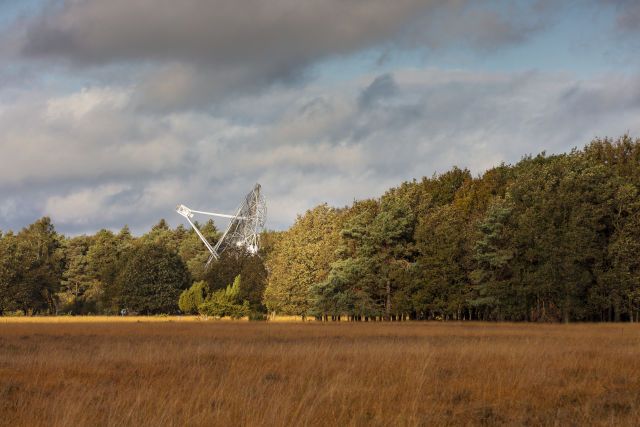
- Not to be missed while cycling is the Dwingeloo Radio Telescope with its 25-metre diameter. Stop for a moment to read the information boards. You can also take a look inside this oldest rotating radio telescope in the world and listen to signals from the universe. Information on opening hours: http://www.camras.nl/bezoekersinfo/.
- The sheepfold 'Achter 't Zaand' comes into view. Chances are the shepherd is out on the moor with the sheep. The sheep make sure the grass does not get the upper hand. Check in advance the departure and arrival times of the flock. On their return, children can pet and cuddle the sheep during cuddle time.
- Just pedal on and you'll end up in Pesse. A real Drents esdorp and already mentioned in 1141 as Petthe. The name comes from Peltha, meaning swamp area. During construction of the A28 motorway near Pesse, a hollowed-out tree trunk was found in the central reservation in 1955. A unique find as this turned out to be the oldest boat in the world. C14 dating showed that this tree trunk canoe dates from between 8200 and 7600 B.C. The canoe was preserved for so long because it had sunk into a riverbed in a peaty soil. It is on display at the Drents Museum in Assen. Grab a terrace in Pesse before embarking on the long journey to Ruinen.
- You cycle past the Spaarbankbosch, a beautiful walking forest and, by Drenthe standards, even an old forest. At the time, it was built by a bank that believed that savers could also benefit from their savings in other ways. Via Fluitenberg, the Boswachterij Ruinen and Gijsselte, Ruinen is already in sight. Are you interested in birds? Just before Ruinen is the Vogelpark Ruinen. Do check the website for opening hours: http://www.vogelparkruinen.nl/openingstijden.
- In Ruinen, get off to enjoy a delicious cup of coffee or tea with pastries in one of the many catering establishments. From the Middle Ages until the French Period, Ruinen was a high Heerlijkheid referred to as the Heerlijkheid Ruinen. In 1140, Benedictine monks founded a monastery here. The monastery was later moved to Dickninge. Remnants of the monastery can be found in and around the current Ruiner Maria church. The interior of this church is definitely worth a look. Museum farm Pasmans Huus in Ruinen gives a picture of life around 1900.
- Rested? Then pedal on now to the Dwingelderveld Visitor Centre on the edge of the National Park. The discovery of Western Europe's largest interconnected wet heathland area starts here. Here you will also find a play forest and a water playground for young adventurers. You can play hide-and-seek in the willow hut village!
- Can you hear the bleating of the sheep yet? Just after the Visitor Centre is the Ruinen sheep flock's pen. The watchtower near the Ruiner sheepfold offers a beautiful view of the Dwingelderveld.
- Hup, back on the bike to cycle into the Dwingelderveld. A last stop before Dwingeloo is possible at Het Theehuys Anserdennen. Located in a beautiful spot in the middle of the forest.
- From Dwingelderveld, you cycle up Westeinde. This hamlet near Dwingeloo has a small-scale, historical structure of agricultural yards interspersed with distinguished houses, of which the Oldengaerde manor house is literally and figuratively the centrepiece. This manor was first mentioned in 1420 and inhabited by the Lords of Echten. The Oldengaerde estate consists of a collection of listed buildings, gardens, garden objects and woods. In 1717, the building received its current classicist appearance. Originally, Oldengaerde was one of eighteen manor houses in Drenthe. Seven of these still remain. Oldengaerde is among the most beautiful and best-preserved of these.
- Just a little more cycling and then Dwingeloo's Siepel will be back in sight. Afterglow can be enjoyed on one of the many terraces on the Brink or De Drift.
93
End point:
Cycling junction 93
Dwingeloo
Navigate to end point
- 93
- 88
- 82
- 83
- 43
- 32
- 58
- 8
- 9
- 34
- 61
- 91
- 41
- 76
- 85
- 53
- 54
- 57
- 56
- 86
- 84
- 78
- 93